



A business class seat can cost five to ten times the economy fare on the same flight. Very few people pay that price with their own money. Most of the travelers around you in the front cabin got there through elite status, miles, a points booking or an upgrade offer they knew to look for.
You can do the same. This guide breaks down every realistic way to get business class upgrades without paying full price, what each one really costs, and which methods are worth your time.
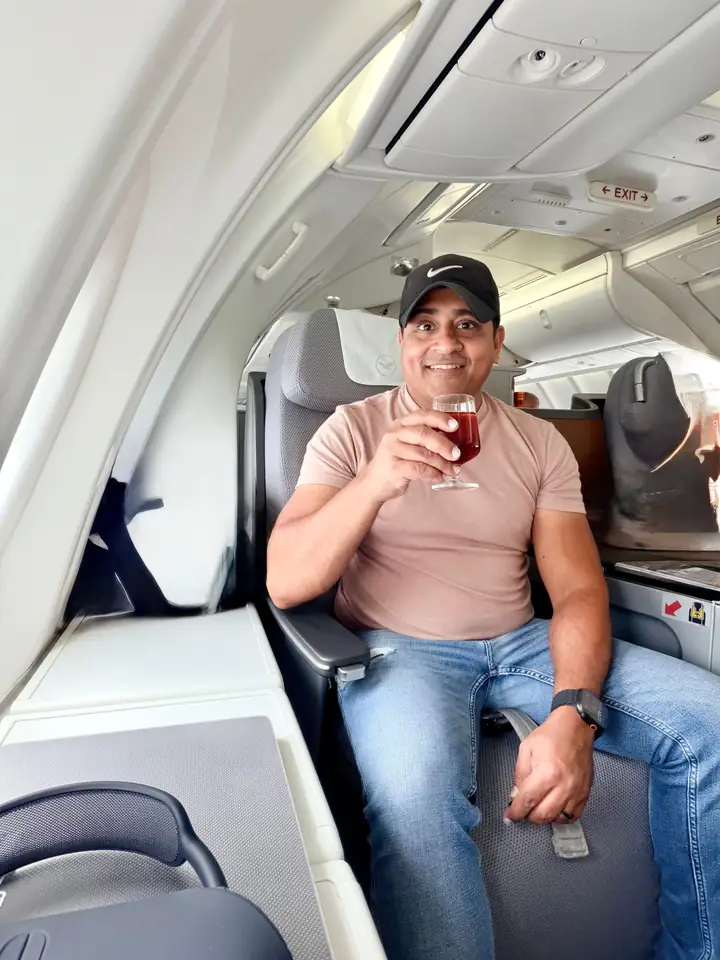
Business Class Upgrades: Your Options Compared
| Method | What it costs you | Best for | The catch |
|---|---|---|---|
| Complimentary elite upgrades | Nothing beyond your normal fare | Frequent flyers on domestic routes | Requires status and is never guaranteed |
| Mileage upgrades | Miles, often plus a cash copay | Travelers with large balances in one program | Only certain fares qualify |
| Bid upgrades | A cash bid you choose | International flights on airlines that offer bidding | You only find out close to departure |
| Paid upgrade offers | A cash price set by the airline | Anyone, especially at check-in | Prices vary widely by flight |
| Award tickets with points | Points or miles plus taxes | Long-haul international trips | Requires award space |
1. Earn Elite Status for Complimentary Upgrades
On US airlines, complimentary upgrades go mainly to elite members on domestic and short international flights. American, United, Delta and Alaska all run upgrade lists ranked by status tier, and higher tiers clear first. The more you fly one airline, the more often you move up front at no extra cost.
Status is not only for road warriors anymore. American lets you earn status-qualifying Loyalty Points through credit card spending and shopping, and other airlines count card spending in different ways. Be aware that rules are shifting. United and Southwest both change how status works in 2027, which we cover in our posts on United Premier status changes and Southwest elite status.
Two rules apply almost everywhere. Basic economy fares are not eligible for upgrades, and on international long-haul flights complimentary upgrades are rare even for top-tier members.
2. Use Miles to Upgrade a Paid Ticket
Many airlines let you use miles to upgrade a cash ticket, usually with a copay in cash on top. The value depends heavily on the fare you bought. Cheaper economy fares often require more miles and a higher copay, or are not eligible at all, while full-fare or premium economy tickets upgrade more easily.
Before you commit, compare the cost with simply booking business class as an award. Paying for an economy ticket and then spending miles and cash on top is often worse value than an outright award booking.
3. Bid for an Upgrade
A number of international airlines let you place a bid to upgrade after you book. You pick an amount within the range the airline shows, and if your bid is accepted, usually a few days before departure, your card is charged and you move up. If it is not accepted, you pay nothing.
The trick is to bid near the low end of the range and to bid on flights that are not full. Business class cabins that are lightly booked a week out are the ones most likely to accept low offers.
4. Look for Paid Upgrade Offers
Airlines increasingly sell leftover premium seats at a discount in their apps, at check-in and at the gate. These offers can be excellent or terrible, so do the math. For example, if you are offered a $199 upgrade on a 2,500-mile flight, that works out to about 8 cents per mile flown. Compare that with what you would actually pay for the comfort, especially on a red-eye.
Check your reservation in the airline app a few days before departure and again at check-in. Offers often drop in price as the flight gets closer and the seats remain unsold.
5. Book Business Class With Points Instead
For long-haul flights, booking the business class seat outright with points is usually the most reliable way to fly up front without paying cash. Transferable points from Chase, Amex, Citi and Capital One move into airline programs that can book partner airlines across an entire alliance.
This is where most travelers who fly business class for free actually get their seats. Our guide on airline alliances explains which programs reach which airlines, and our walkthrough of finding award availability when seats are limited shows how to search for space. For a real-world example, see how to fly Emirates business class to Dubai with points.
Which Upgrade Method Fits Your Trip?
The right approach depends on how often you fly and where you are going. Here is how to think about it for a few common situations.
You fly one airline every month for work
Elite status is your best tool. Concentrate your flying and credit card spending with one airline, and complimentary upgrades on domestic routes will start to come regularly. Save your miles for international trips where complimentary upgrades rarely clear.
You take one or two big international trips a year
Points are your best tool. Build a balance of transferable bank points, then book business class as an award on a partner airline. This avoids relying on upgrade lists you are unlikely to top, and it locks in your seat months ahead.
You already bought an economy ticket
Check whether your airline offers bid upgrades, and watch the app for paid upgrade offers. On a long overnight flight, a reasonable offer can be worth taking, especially if it means arriving rested for a meeting or the first day of a vacation.
You are traveling with family
Upgrades are hard to get for several people at once, because they clear one seat at a time. If everyone needs to sit up front, booking business class awards together is usually more realistic than hoping for multiple upgrades.
Upgrade Myths Worth Ignoring
- Dressing up gets you upgraded. Upgrades are processed by automated lists based on status and fare. Looking sharp does not hurt, but it will not move you to the front.
- Asking nicely at the gate works. Gate agents follow the upgrade list. If there are no elites waiting and a seat is open, the airline will usually sell it first.
- Volunteering for an oversold flight gets you upgraded. You may receive compensation such as a travel credit, but an upgrade on the new flight is not standard.
Step-by-Step: Your Upgrade Checklist
- Join the loyalty program of the airline you fly most and add your number to every booking.
- Avoid basic economy if you want any chance of an upgrade.
- Check the seat map before you book. Flights with many open premium seats give you better odds.
- Price the business class award with points before you buy an economy ticket.
- If you buy economy, check for bid or paid upgrade offers in the app.
- Check again at check-in, when discounted offers often appear.
- Do the cost-per-mile math on any offer before you accept.
Takeaway
Getting business class without paying full price is less about luck and more about using the right method for the flight. Elite status works best on domestic routes, bids and paid offers can be bargains on half-empty flights, and for long-haul international trips, booking the seat outright with points is usually the most dependable route. Skip the myths, do the math on every offer, and you will spend a lot more of your flying time in the front cabin.
